
When I published my first book, I made a critical mistake. A local newspaper wanted to feature my debut novel, and the editor asked for my press kit. I stared blankly at the email, unsure what to send. That embarrassing moment taught me why every author needs a professional media kit ready before opportunities knock.
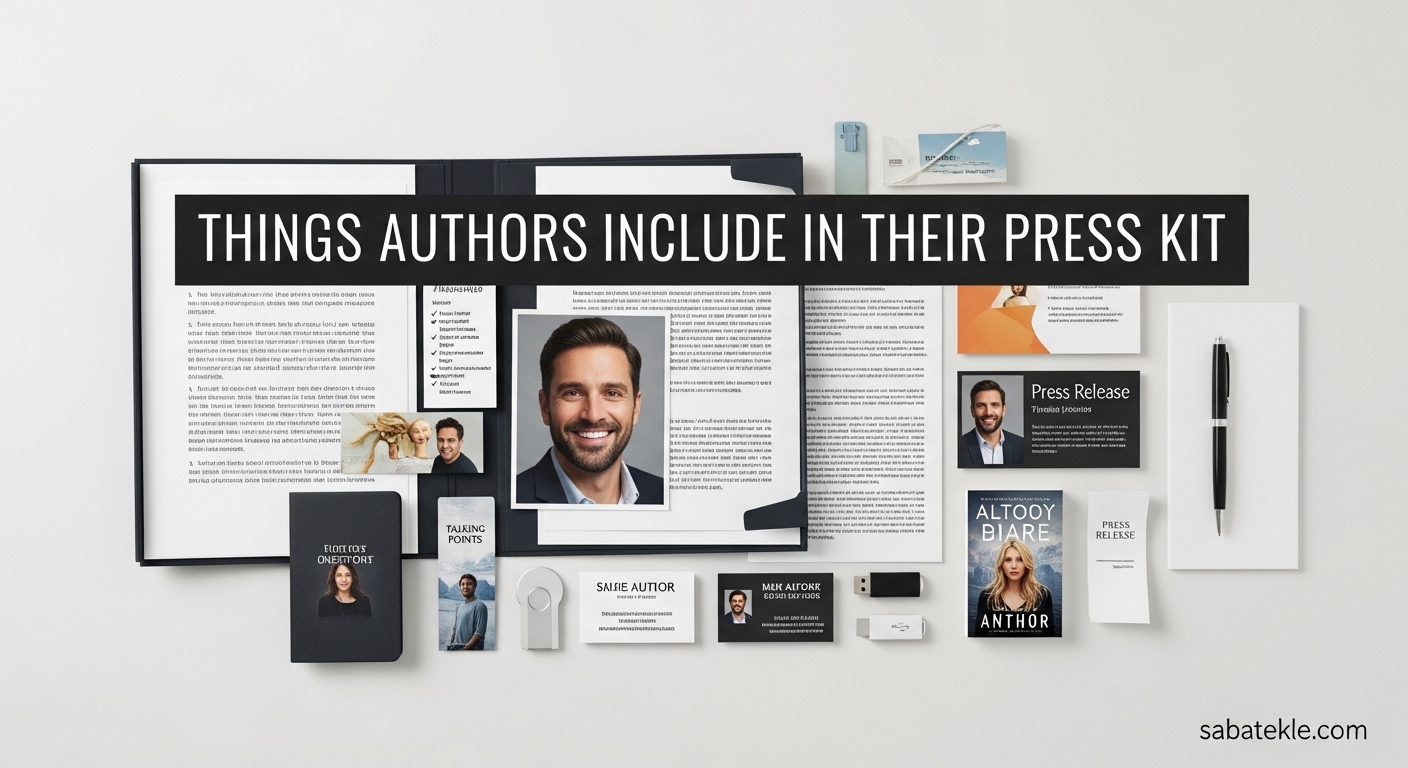
So, what are the essential things authors include in their press kit? An effective author press kit contains your bio, professional photos, book cover images, synopsis, contact information, press releases, reviews, sell sheets, book excerpts, and media coverage. These components work together to give journalists, reviewers, and event organizers everything they need to promote your work professionally.
In this guide, I will walk you through each element based on what has worked for me and hundreds of authors I have coached. Whether you are preparing for your first book launch or updating existing materials, this checklist will help you create a press kit that opens doors.
Table of Contents
What Is an Author Press Kit?
An author press kit, also called a media kit, is a curated collection of promotional materials that tells your professional story. Think of it as your author resume combined with your book marketing materials in one organized package.
Journalists, book reviewers, bloggers, podcasters, festival organizers, and bookstore owners use these materials when deciding whether to feature you or your work. Having a complete press kit ready means you never miss an opportunity because you are scrambling to gather information.
Your press kit can take several forms: a dedicated page on your author website, a downloadable PDF, or a shared folder containing all your assets. Many successful authors maintain both HTML and PDF versions to accommodate different media preferences.
The 10 Essential Things Authors Include in Their Press Kit
Here are the core components every author media kit should contain. I have organized these by priority, starting with the absolute must-haves that journalists expect to find immediately.
1. Author Bio (Short and Long Versions)
Your author biography is often the first thing journalists read, so make it count. You need two versions: a short bio of 50-75 words for quick introductions, and a longer version of 150-200 words for feature articles.
Your bio should include your name, your genre or writing focus, your location (city and state are sufficient), relevant credentials, and one interesting personal detail that humanizes you. Avoid listing every award unless they are genuinely prestigious. Instead, focus on what makes you interesting as a person and credible as an author.
Write in third person, as journalists will copy this directly into their articles. Keep it current by updating it with each new publication.
2. Professional Author Photos
Include at least two high-resolution headshots in your press kit: one serious and one more casual or smiling. These should be professional quality, even if you hire a photographer just once and use those photos for several years.
Provide images in multiple resolutions. High-resolution files at 300 dpi work for print media, while web-optimized versions load faster for online articles. Save your files with clear names like AuthorName_Headshot_HighRes.jpg and AuthorName_Headshot_Web.jpg.
Make sure your face is clearly visible and the background is not distracting. Journalists need photos that work in both color and black-and-white printing.
3. Book Cover Images
Your book cover is your most important visual marketing asset. Include high-resolution cover images for every book you have published, formatted at 300 dpi for print quality.
Provide the cover as both a standalone image and in a 3D mockup format if possible. Mockups showing the book spine or a stacked display help media outlets visualize your work in retail settings. Label each file clearly with the book title, your name, and the resolution.
If you have multiple formats (hardcover, paperback, ebook), include covers for each. Some publications specifically want to show the hardcover or mention the ISBN, so having these details ready saves back-and-forth emails.
4. Book Synopsis or Description
Write a compelling book synopsis that journalists can use for reviews and features. Like your bio, prepare two versions: a short summary of 75-100 words and a longer description of 200-250 words.
Your synopsis should hook the reader immediately, introduce the main characters or central conflict, hint at the stakes without spoiling the ending, and convey the tone and genre. Think of it as the back cover copy written for media professionals rather than book buyers.
Include key details like the publication date, publisher, ISBN, page count, genre, and target audience. This information helps journalists categorize your book correctly and include relevant details in their coverage.
5. Contact Information
Make it ridiculously easy for media professionals to reach you. Include your email address, phone number, website URL, and social media handles. If you have a publicist or literary agent handling media inquiries, list their contact information prominently instead of or alongside your own.
Specify your time zone if you are open to interviews, as this helps schedulers coordinate calls across regions. Also note your availability preferences: are you open to early morning radio interviews? Evening podcast recordings? Weekend events?
Consider including a calendar link if you use scheduling software, making it easy for interviewers to book time without the email back-and-forth.
6. Press Release
A press release announces your book launch, award win, or other newsworthy event in a standardized format that journalists recognize. Include a template press release in your kit so media outlets can see how to frame stories about you.
A standard press release contains a compelling headline, dateline, lead paragraph summarizing the news, body paragraphs with supporting details, a brief author bio, and contact information. Keep it to one page unless you have substantial news to share.
Even if you are not currently launching a book, having a sample press release shows journalists that you understand how media coverage works. It also gives them language they can adapt for features about you.
7. Reviews and Endorsements
Social proof matters. Collect positive reviews from reputable sources like established book blogs, Amazon reviewers with verified purchases, industry publications, and fellow authors. Include 3-5 of your strongest endorsements with attribution.
For each review, include the reviewer name, publication or platform, date, and a brief excerpt. If you have starred reviews from major outlets or blurbs from bestselling authors, lead with those. Quality matters more than quantity.
Update this section regularly as new reviews come in. Fresh testimonials show that your work continues to resonate with readers.
8. Sell Sheet
A sell sheet is a one-page document that functions as a quick reference guide for bookstores, libraries, and sales teams. It summarizes your book’s key selling points in an easily scannable format.
Your sell sheet should include the book cover image, title and subtitle, author name, ISBNs for all formats, publication date, publisher, price, page count, trim size, genre, target audience, brief synopsis, marketing highlights, and ordering information.
Think of your sell sheet as the CliffsNotes version of your full press kit. It gives busy booksellers and librarians everything they need to make a stocking decision in under 60 seconds.
9. Book Excerpt or Chapter Sample
Give journalists a taste of your writing style by including a polished excerpt from your book. Choose a compelling scene that stands alone without requiring plot context from earlier chapters.
Keep your excerpt to 1,000-1,500 words, roughly the length of a magazine article. Include a note indicating where the excerpt appears in the book so journalists can reference it accurately.
Some authors also include a PDF of the first chapter for media who want more context. Just make sure the file size is reasonable for email attachments.
10. Media Coverage and Awards
Create a running list of media appearances, interviews, and awards that establish your credibility. Include the publication name, article title, date, and a link if available.
For awards, note the awarding organization, the specific honor received, and the year. Even nominations and shortlistings demonstrate that your work has been evaluated positively by industry professionals.
This section acts as your media resume, showing journalists that other outlets have found you worth covering. It also gives them story angles they might not have considered.
Bonus Elements to Make Your Press Kit Stand Out
Once you have the essentials covered, consider these additional elements that can set you apart from other authors seeking media attention.
Q&A Tip Sheet for Journalists
Prepare a list of 8-10 potential interview questions with your answers already written out. This saves journalists time and ensures you get to discuss the topics you care about most.
Include a mix of questions about your writing process, the themes in your book, your background, and current industry topics. Write your answers in complete sentences that can be quoted directly.
Audio Pronunciation Guide
If your name is difficult to pronounce or you have a unique pronunciation preference, include a short audio clip or phonetic spelling guide. This simple courtesy prevents the awkwardness of hearing your name mangled on live radio.
Write out the phonetic pronunciation using standard dictionary notation, or record a 10-second audio file saying your name clearly.
Mood Boards and Book Atmosphere Images
For fiction authors, mood boards help journalists visualize the world you have created. Include 3-5 images that capture the aesthetic, setting, or emotional tone of your book.
These might be landscape photos of your setting, historical images that inspired your period piece, or atmospheric shots that match your genre. Make sure you have rights to use these images or that they are from free stock photo sources.
Copy Buttons and Easy Sharing Features
If you host your press kit as an HTML page on your website, add “copy” buttons next to your bio, synopsis, and other text elements. This lets journalists grab your content with one click instead of highlighting and copying manually.
This small UX improvement makes journalists more likely to use your exact wording, which ensures accurate quotes and attributions.
Speaking Events and Availability Calendar
If you are open to speaking engagements, include information about your presentation topics, audience types you address, and your availability. Some authors embed a simple calendar showing upcoming events or open booking windows.
Event organizers often browse author press kits when looking for speakers, so make it easy for them to see what you offer.
Tips for Organizing and Formatting Your Press Kit
Creating great content is only half the battle. How you organize and present your press kit matters just as much as what it contains.
Many journalists prefer HTML-based press kits over PDFs because they can copy text directly and links work properly. If you do provide a PDF, also offer plain text versions of your bio and synopsis that can be easily copied into articles.
Label every file clearly with descriptive names that include your name and the content type. A file named JaneDoe_AuthorBio_Short.txt tells journalists exactly what they are downloading, while Bio_Final.docx forces them to open the file to see what it contains.
For images, provide them in JPG format at 300 dpi for print and 72 dpi for web. Include dimensions in the filename so journalists can quickly find the right size for their needs.
Keep your press kit updated. Set a calendar reminder to review your materials every three months, and update immediately when you publish a new book, win an award, or receive significant media coverage.
Things Authors Include in Their Press Kit: Quick Reference Checklist
Here is a printable checklist of everything discussed in this guide:
Essential Components:
- Author bio (50-75 words and 150-200 word versions)
- Professional author photos (high-res and web-optimized)
- Book cover images (300 dpi, multiple formats)
- Book synopsis (short and long versions)
- Complete contact information
- Press release template
- Reviews and endorsements (3-5 selections)
- Sell sheet (one-page summary)
- Book excerpt or chapter sample
- Media coverage and awards list
Bonus Elements:
- Q&A tip sheet for journalists
- Audio pronunciation guide
- Mood boards and atmosphere images
- Copy buttons for easy sharing
- Speaking events and availability calendar
FAQ
What to include in an author press kit?
An author press kit should include your author bio (short and long versions), professional headshots, book cover images, book synopsis, contact information, press release, reviews and endorsements, sell sheet, book excerpt, and list of media coverage or awards. These materials give journalists everything they need to write about you and your books.
What are the 7 components of a press release?
A standard press release contains: 1) A compelling headline, 2) A dateline with location and date, 3) A lead paragraph summarizing the news, 4) Body paragraphs with supporting details and quotes, 5) Boilerplate information about the author or publisher, 6) Contact information for media inquiries, and 7) An end marker (usually ###). Keep the entire release to one page when possible.
Should I hire someone to create my press kit?
You can create a professional press kit yourself using the guidelines in this article. Many authors successfully DIY their media kits by writing their own bios, using smartphone photos edited by affordable online services, and organizing everything on a simple website page. Only consider hiring a professional if you have the budget and want premium design elements beyond basic organization.
How often should I update my press kit?
Review and update your press kit at least every three months. Update immediately when you publish a new book, receive an award, get significant media coverage, change contact information, or update your author photo. An outdated press kit with old information can damage your credibility with journalists who expect current materials.
Can I include multiple books in one press kit?
Yes, you should include all your published books in one comprehensive press kit. Create individual sections for each book with its cover image, synopsis, and key details. Also include a combined bibliography or book list page that shows your full catalog. This approach saves you from maintaining separate kits while giving journalists options for which book to feature.
Final Thoughts on Things Authors Include in Their Press Kit
A professional press kit is one of the most valuable marketing investments you can make as an author. When a journalist, reviewer, or event organizer requests information about you, having these materials ready demonstrates your professionalism and makes their job easier.
Start with the ten essential components outlined in this guide: your bio, photos, covers, synopsis, contact info, press release, reviews, sell sheet, excerpt, and media coverage. Once those are solid, add bonus elements that showcase your unique personality and book atmosphere.
Remember that your press kit is a living document. Update it regularly, keep it organized, and make it easy for media professionals to use. The time you invest in creating these materials will pay off every time an opportunity arises and you are ready to seize it.
What questions do you have about creating your author press kit? I would love to hear what is working for you or where you are getting stuck.