
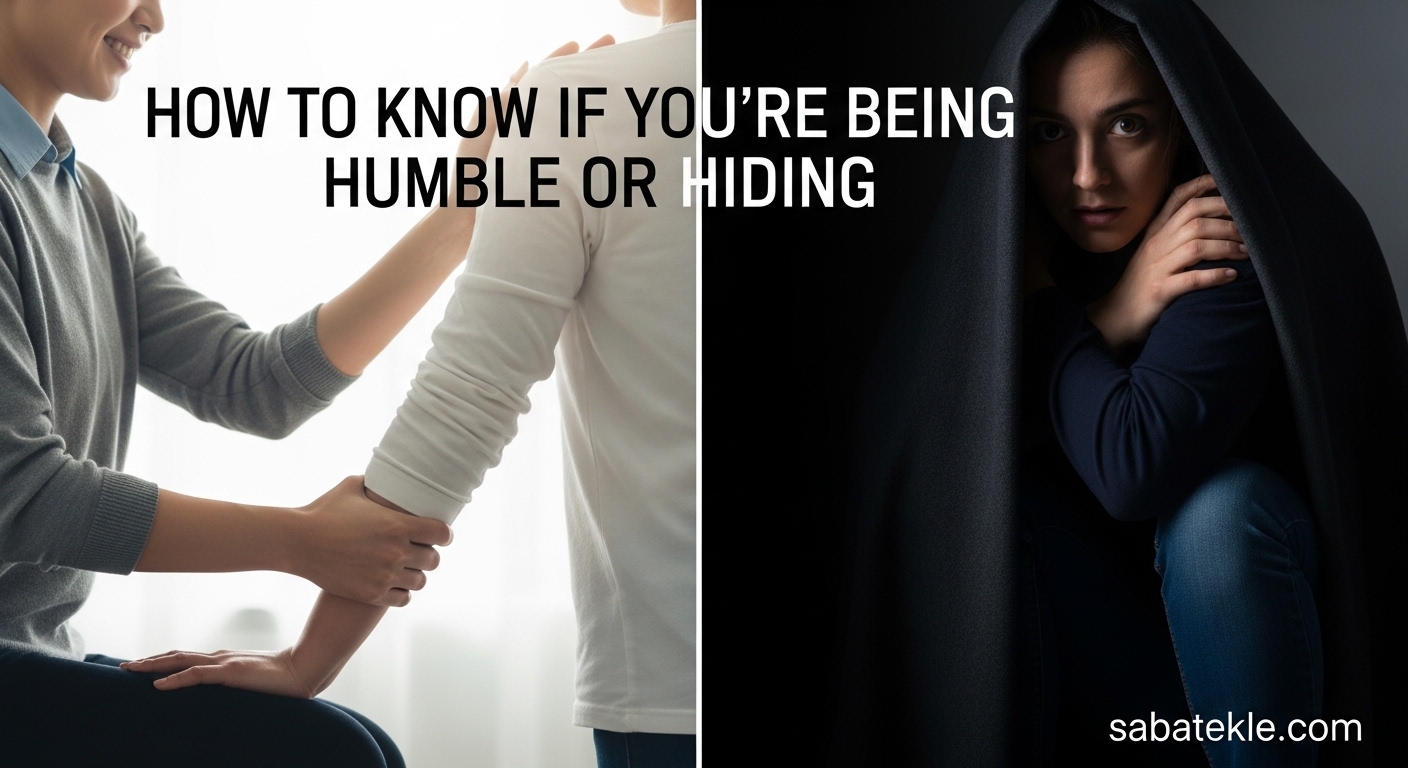
Have you ever wondered if your quiet demeanor is genuine humility or just a mask for fear? I asked myself this question for years before realizing I was confusing being humble with hiding. The distinction matters more than you might think.
In this guide, I will show you exactly how to know if you’re being humble or hiding. You will learn the subtle signs that separate authentic humility from false modesty, gain a practical self-assessment framework, and discover daily practices to cultivate the real thing. Whether you are questioning your own behavior or trying to understand someone else, this article gives you clear markers to tell the difference.
Table of Contents
How to Know If You’re Being Humble or Hiding: A Self-Assessment Framework
True humility is a quiet confidence rooted in self-awareness and openness to growth. It is not fear or self-suppression. The core distinction between genuine humility and hiding lies in motivation.
When you are genuinely humble, your quietness comes from security. You do not need to prove your worth because you already know it. When you are hiding, your quietness comes from insecurity. You stay small because you fear being seen, judged, or rejected.
Psychologists at UC Berkeley recently linked intellectual humility to better decision-making, stronger relationships, and reduced polarization. Their research shows that humble people are not weak. They are brave enough to admit what they do not know and strong enough to change their minds.
The hiding mindset, by contrast, stems from what researchers call self-enhancement bias. This is the tendency to protect your ego by avoiding situations where you might fail or be criticized. It looks like humility on the surface, but it is actually pride in disguise.
7 Signs You Are Genuinely Humble
Authentic humility has specific markers that set it apart from mere shyness or strategic modesty. Here are seven signs you are genuinely humble, not hiding.
1. You Openly Admit Mistakes Without Self-Deprecation
Genuinely humble people acknowledge their errors clearly and directly. They say “I was wrong about that” without adding “I am always such an idiot” or “This is typical of me.” They separate the mistake from their worth as a person.
If you find yourself owning mistakes without spiraling into shame, you are displaying real humility. The hiding version sounds like “I guess I messed up again” with an implied inadequacy.
2. You Celebrate Others Genuinely, Not Strategically
When someone succeeds, you feel happy for them. Not jealous. Not threatened. Not calculating how their success reflects on you. You can compliment others without adding self-deprecating qualifiers.
Hiding often looks like deflecting attention to others because you do not want the spotlight on yourself. Genuine celebration comes from abundance, not avoidance.
3. You Have Quiet Confidence Without Needing Validation
You know your strengths without needing to announce them. You do not fish for compliments or drop achievements into conversation hoping someone will acknowledge you. Your sense of worth is internal, not outsourced.
This is what Natalie Hilton calls the difference between insecurity (fear-based) and humility (confidence-based). Insecurity needs constant reassurance. Humility rests in self-knowledge.
4. You Are Open to Feedback Without Becoming Defensive
When someone offers constructive criticism, you listen. You ask questions. You consider whether they might be right. You do not immediately dismiss them or spiral into self-criticism.
Genuine humility sees feedback as data for growth. Hiding sees feedback as a threat to carefully constructed self-protection.
5. You Put Others First Without Losing Yourself
You can defer to others, let them speak first, or prioritize their needs without feeling erased. Your generosity comes from strength, not from a belief that you do not matter.
This is the key distinction. Hiding says “I do not matter enough to speak up.” Humility says “I am secure enough to let others shine.”
6. You Are Willing to Learn From Anyone
You can learn from people younger than you, less experienced than you, or in completely different fields. You do not need the teacher to have status or credentials before you respect their knowledge.
Research on intellectual humility shows this openness is one of the strongest predictors of personal growth. People high in this trait constantly expand their understanding because they are not protecting an image of already knowing everything.
7. You Handle Success and Failure With Similar Grace
When you succeed, you acknowledge it without arrogance. When you fail, you acknowledge it without despair. Your emotional equilibrium stays relatively stable regardless of external validation or criticism.
This grace under pressure is perhaps the clearest sign of genuine humility. It shows that your identity is anchored in something deeper than performance or perception.
7 Signs You May Be Hiding Behind False Humility
False humility is tricky because it masquerades as virtue. Here are seven signs that what you call humility might actually be hiding.
1. You Avoid Visibility Out of Fear, Not Peace
You turn down opportunities to speak, lead, or be recognized not because you are content in the background, but because you are terrified of being seen. You tell yourself you are being humble, but your body feels anxiety at the thought of attention.
One Reddit user in r/selfimprovement captured this perfectly: “I used to think I was shy and humble, but then I realized I was scared and proud.” That distinction is everything.
2. You Deflect Compliments Anxiously, Not Graciously
When someone praises you, you immediately redirect. Not because you are genuinely focused on the team, but because you cannot tolerate being seen positively. You fear the expectation that comes with praise.
Genuine humility accepts compliments with “thank you” and moves on. False humility argues with them, minimizes them, or immediately redirects to someone else.
3. You Compare Yourself to Feel Superior
Deep down, you believe you are better than others but you never say it. You judge people silently while maintaining a humble exterior. Your modesty is a strategy to avoid the social consequences of arrogance, not a genuine belief in equality.
This is what psychologists call communal narcissism. You see yourself as especially humble, especially caring, especially moral compared to others. The comparison is still there, just inverted.
4. You Engage in Humble-Bragging
Your social media posts start with “So humbled to…” or “Blessed to announce…” You mention your achievements in the context of gratitude or surprise, but you still mention them constantly.
Research shows this backfires. People see through humble-bragging and often find it more annoying than straightforward boasting. It is hiding because it tries to have it both ways: get credit while appearing not to want it.
5. You Resist Growth Opportunities That Require Risk
You stay in your comfort zone and call it contentment. You avoid stretching assignments, new challenges, or visibility because you might fail. You frame this as knowing your limits or not needing external validation.
Genuine humility takes risks because failure does not threaten your identity. Hiding avoids risks because failure would confirm your secret fear that you are not enough.
6. You Need Validation Through Your Modesty
You want people to notice how humble you are. You feel slighted when others do not acknowledge your selflessness. Your modesty becomes its own form of ego.
This is the paradox that confuses many people. Wanting to appear humble is itself a form of pride. True humility does not need to be recognized as humility.
7. You Feel Resentful When Overlooked
You insist you do not want recognition, but you feel bitter when others get it instead of you. You serve quietly but keep score internally. Your resentment reveals that your humility was strategic, not genuine.
Genuine humility can serve without recognition indefinitely because the service itself is the reward. False humility keeps a ledger.
Genuine Humility vs Insecurity vs Pride: A Comparison
Understanding the differences between these three postures helps clarify where you stand. Here is a side-by-side comparison.
Genuine Humility: Motivated by security and openness. You admit limitations without shame. You celebrate others without diminishment. You accept praise without arrogance. You serve without scorekeeping. The root is confidence.
Insecurity (Hiding): Motivated by fear of exposure. You avoid visibility to protect yourself. You deflect praise due to low self-worth. You stay small to avoid failure. The root is fear.
Pride (False Humility): Motivated by desire for status. You appear humble to gain admiration. You humble-brag to get credit. You serve to be seen as good. The root is ego.
Most people move between these states depending on context. You might be genuinely humble in your marriage but hiding in your career. You might have authentic humility about your intelligence but false humility about your appearance. Self-assessment is ongoing, not a one-time diagnosis.
The Paradox of Knowing You’re Humble
Here is the problem that trips up almost everyone who tries to assess their own humility. The moment you think “I am humble,” you are in danger of pride. The moment you are proud of your humility, you have lost it.
This paradox is real and worth sitting with. How do you cultivate humility without making it an achievement to be proud of? How do you assess yourself without self-deception?
The answer lies in focusing on behavior rather than identity. Instead of asking “Am I humble?” ask “Am I behaving humbly in this moment?” Instead of claiming humility as a character trait, practice humble actions as a daily discipline.
Humility is less a quality you possess and more a direction you move. You are never done becoming humble. You simply practice openness, curiosity, and service one decision at a time.
Another way to navigate this paradox is to get feedback from trusted others. We are notoriously bad at self-assessing our own humility because we have blind spots and biases. Ask people who know you well: Do I receive feedback well? Do I celebrate others genuinely? Do I seem secure or defensive?
A Practical Self-Assessment: Are You Humble or Hiding?
Use these five questions to assess yourself right now. Answer honestly. This is for your growth, not for sharing.
Question 1: When I receive a compliment, do I feel gratitude or discomfort?
Genuine humility receives praise with simple thanks. Hiding feels awkward, anxious, or undeserving. Notice your emotional reaction, not just your words.
Question 2: When someone succeeds where I have failed, do I feel curiosity or threat?
Genuine humility wants to learn from their success. Hiding feels diminished by their achievement. Pride feels competitive and resentful.
Question 3: When I make a mistake, do I separate the error from my identity?
Genuine humility says “I made a mistake.” Hiding says “I am a mistake.” Pride says “That was not really a mistake” or “It was someone else’s fault.”
Question 4: Do I avoid visibility because I am content or because I am afraid?
Check your body. Contentment feels peaceful. Fear feels tight, anxious, or nauseating. Your physiology often reveals the truth your mind obscures.
Question 5: When I serve others, do I keep score?
Genuine humility serves without expectation. Hiding serves to prove worth. Pride serves to be admired. Ask yourself what you expect in return.
Scoring Guidance:
Mostly genuine humility responses: You are on the right track. Keep practicing openness and service.
Mostly hiding responses: You are using humility as protection. Work on building self-worth separate from performance. Consider therapy or coaching to address the underlying fear.
Mostly pride responses: Your humility is performative. Focus on genuine curiosity about others and reduce self-focus.
Daily Practices to Cultivate True Humility:
Ask for feedback once per week from someone you trust. Admit one mistake publicly each day. Celebrate someone else’s success without mentioning your own. Learn something from someone unexpected. Serve anonymously without telling anyone.
FAQ
What are signs of humbleness?
Signs of genuine humbleness include: openly admitting mistakes without self-deprecation, celebrating others’ success without jealousy, maintaining quiet confidence without needing validation, being open to feedback without defensiveness, putting others first without losing yourself, being willing to learn from anyone regardless of status, and handling both success and failure with similar grace.
How can I tell if I am truly humble?
You can tell if you are truly humble by examining your motivations. True humility comes from security and confidence, not fear. Ask yourself: Do I avoid visibility out of peace or fear? Do I accept compliments gracefully or anxiously deflect them? Do I serve without keeping score? Do I feel curiosity or threat when others succeed? Genuine humility feels open and expansive; hiding feels contracted and fearful.
What can humility be mistaken for?
Humility is commonly mistaken for insecurity, shyness, and false modesty. Insecurity-based hiding looks like humility but stems from fear of exposure and low self-worth. False modesty (pride in disguise) looks like humility but is actually a strategy to gain admiration while appearing not to want it. True humility is confident and secure, while these impostors are fear-based or ego-based.
How to spot fake humility?
Signs of fake humility include: humble-bragging about achievements, deflecting compliments anxiously rather than accepting them graciously, comparing yourself to others while maintaining a humble exterior, resisting growth opportunities that require risk, feeling resentful when overlooked, and needing validation through your modesty. Fake humility is performative and seeks credit while appearing not to want it.
Is fake humility worse than arrogance?
Research suggests fake humility (humble-bragging) is often perceived more negatively than straightforward arrogance because it feels deceptive. While arrogance is transparent, false humility tries to manipulate perception. Both stem from ego, but fake humility adds dishonesty to the mix. Many people find they can respect obvious confidence more than disguised self-promotion. The healthiest path is genuine humility: knowing your worth without needing to prove it.
Conclusion
Knowing how to tell if you’re being humble or hiding is not about finding a final answer. It is about developing ongoing self-awareness. The question itself is valuable because it keeps you honest.
Remember the core distinction: genuine humility comes from security, not fear. It looks like quiet confidence, not anxious withdrawal. It celebrates others without diminishment and accepts praise without arrogance. Most importantly, it does not need to be recognized as humility.
If you discovered today that you have been hiding behind false humility, that awareness is the first step toward change. Start with the daily practices outlined in this guide. Ask for feedback. Admit mistakes. Serve anonymously. Learn from everyone.
The goal is not to become perfectly humble. The goal is to move in the direction of openness, curiosity, and service one decision at a time. That is how you know you are being humble, not hiding.