
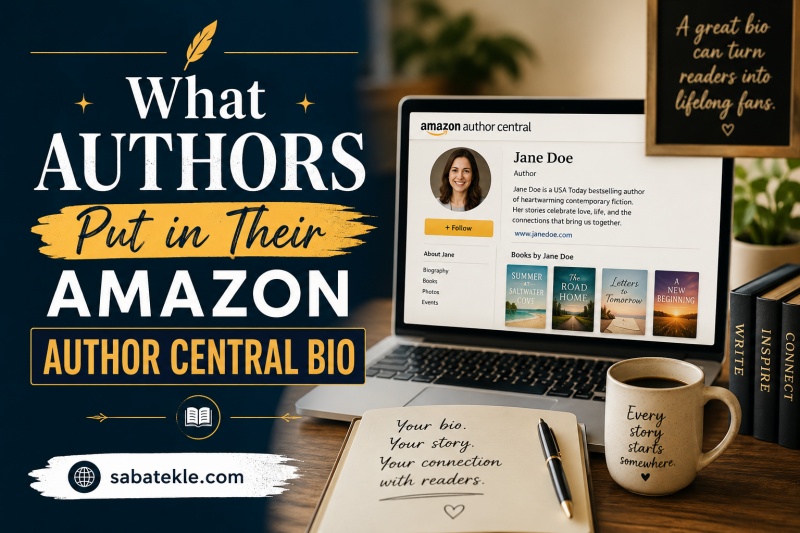
Your Amazon author central bio is often the first impression readers have of you. After spending months or years writing your book, this small block of text can make the difference between a reader clicking “buy” or moving on to the next author.
I have helped hundreds of authors optimize their Amazon presence over the past five years. The pattern is always the same. Authors either skip their bio entirely or cram it with awards nobody cares about. Neither approach works.
This guide will show you exactly what authors put in their Amazon Author Central bio that actually sells books. You will learn the essential elements, see real examples that work, and avoid the mistakes I see daily.
Table of Contents
Why Your Amazon Author Bio Matters
Your author bio serves three critical functions on Amazon. It builds trust with potential readers, establishes your credibility in your genre, and improves your discoverability through Amazon’s search algorithm.
Think about your own buying habits. Before you purchase a book from an unknown author, you check their author page. You want to know if they are qualified to tell this story. A blank or poorly written bio creates doubt. A strong bio creates connection.
From a marketing perspective, your Amazon author page is free real estate. Amazon gives you this space to convert browsers into buyers. Authors who optimize their bios consistently report higher click-through rates and better sales rankings.
Your bio also feeds into Amazon’s recommendation engine. When you include relevant keywords about your genre and expertise, Amazon knows which readers to show your books to.
What is Amazon Author Central
Amazon Author Central is a free platform where authors manage their presence on Amazon. You access it at authorcentral.amazon.com using your existing Amazon login.
Your Author Central page is separate from your book’s product page. While the product page focuses on one specific book, your author page showcases your entire catalog and personal brand. This is where readers go to learn about you as a writer.
Through Author Central, you can add your bio text, upload an author photo, link your blog via RSS, connect social media accounts, and view sales data for your books. All of these elements work together to create a professional author brand.
7 Essential Elements Every Author Bio Needs
After analyzing hundreds of successful author bios, I have identified seven elements that consistently appear in pages that convert readers into fans.
1. A Hook That Grabs Attention
Your first sentence matters most. Start with something interesting about yourself or your writing. Avoid generic openings like “John Smith is an author who lives in New York.” That tells the reader nothing.
Instead, try something like “Jane Williams spent ten years as a forensic accountant before turning to crime fiction” or “Mark Chen writes sci-fi from a tiny cabin in the mountains of Oregon.” These openings create curiosity.
2. Relevant Credentials
Include qualifications that matter to your specific readers. If you write medical thrillers, mention your nursing degree. If you write historical fiction, highlight your PhD in history. If you write romance, your decade-long marriage might actually be relevant.
The key is relevance. Your readers do not care about every award you have won. They care about why you are qualified to write this specific book.
3. A Personal Touch
Readers buy from authors they feel connected to. Share one or two personal details that humanize you. Mention your rescue dog, your coffee addiction, or your obsession with antique maps.
One author I worked with mentioned her habit of writing at 4 AM before her kids wake up. That single detail generated dozens of comments from readers who related to the struggle of creating art while parenting.
4. Genre Indication
Make it crystal clear what you write. Use genre keywords naturally in your bio. Phrases like “thriller author,” “cozy mystery writer,” or “historical romance novelist” help Amazon categorize you correctly.
This also helps readers immediately understand if your books match their interests. A romance reader who lands on your page should know within seconds that you write romance.
5. A Clear Call-to-Action
Tell readers exactly what to do next. “Sign up for my newsletter at authorname.com” or “Follow me on Amazon to get updates on new releases” gives them a path forward.
Your CTA should lead to something you own, preferably your email list. Social media followers are rented. Email subscribers are assets you control.
6. Strategic Keywords
Include words readers might search for. If you write “cozy mysteries with cats,” say that. If your books are “clean romance for teens,” include those phrases.
Do not stuff keywords awkwardly. Write naturally, but be intentional about the phrases that describe your work.
7. Appropriate Length
Your bio should be between 100 and 250 words. Shorter than 100 words looks like you do not care. Longer than 250 words loses readers.
Test your bio on mobile. Most Amazon browsing happens on phones. If readers have to scroll endlessly to see your books, your bio is too long.
Fiction vs Nonfiction Bio Differences
Fiction and nonfiction authors need different approaches to their Amazon author central bio. The reader’s expectations are fundamentally different.
Fiction Author Bios
Fiction readers want to know about the person behind the stories. They care about your personality, your quirks, and what inspires your imagination. Your bio can be more casual and creative.
Focus on what makes you interesting as a human. Mention your day job if it is unexpected. Share your writing rituals. Talk about the setting of your books and why you chose it.
Fiction bios should read like mini-stories. They give readers a taste of your writing voice before they ever open your book.
Nonfiction Author Bios
Nonfiction readers want credibility first, personality second. They are looking for proof that you know what you are talking about. Your bio needs to establish expertise immediately.
Lead with credentials, experience, and results. If you wrote a book about investing, mention your 20 years on Wall Street. If you wrote a cookbook, mention your culinary degree or popular food blog.
Nonfiction bios should read like professional introductions. The personal touches still matter, but they come after you have established authority.
Step-by-Step Guide to Writing Your Bio
Here is the process I use with my coaching clients to craft bios that convert.
Step 1: Gather Your Raw Material
Write down everything that might matter. Your education, work history, personal interests, writing accomplishments, and life experiences. Do not filter yet. Just brainstorm.
Step 2: Identify What Matters to Your Readers
From your brainstormed list, circle only the items that help readers trust you or connect with you. That nursing degree matters for medical thrillers. Your love of hiking matters if you write wilderness survival guides.
Step 3: Choose First or Third Person
Most successful authors use third person for their Amazon author central bio. “John Smith writes thrillers” sounds more professional than “I write thrillers.”
However, first person can work for certain memoir or personal development authors. It creates intimacy. Test both and see which feels right for your brand.
Step 4: Write Three Drafts
Write your bio three different ways. One focused heavily on credentials. One focused heavily on personality. One balanced approach. Then ask beta readers or writer friends which version makes them want to buy your book.
Step 5: Edit for Length
Cut your draft down to 150 words maximum. Remove filler words. Replace passive voice with active voice. Every sentence should earn its place.
Step 6: Add Your Call-to-Action
End with a clear next step. Make it specific and benefit-driven. “Join my newsletter for exclusive short stories” works better than “Sign up for my newsletter.”
Step 7: Test and Iterate
Your bio is not permanent. Update it quarterly. Add new achievements. Remove outdated information. Test different CTAs and see which drives more signups.
Author Bio Examples That Work
Let me show you three examples of effective Amazon author central bios and explain why they work.
Example 1: The Genre Specialist
“Sarah Chen writes cozy mysteries featuring food, cats, and small-town charm. A former pastry chef, she brings authentic culinary detail to every novel. Sarah lives in Vermont with her husband, two Maine Coons, and an extensive collection of vintage cookbooks. Join her reader group at sarahchen.com for recipes from her books.”
This bio works because it immediately establishes genre, includes relevant credentials, adds personal touches, and ends with a specific CTA. At 46 words, it is concise.
Example 2: The Credibility Builder
“Dr. Michael Torres spent fifteen years as an emergency room physician before turning to medical thrillers. His debut novel, Code Blue, was inspired by real cases he handled during his residency. Michael lives in Houston with his family and continues practicing medicine part-time. Follow him for updates on his upcoming releases.”
This bio establishes authority immediately with the medical credentials. The specific mention of his debut novel adds credibility. The personal touches come after expertise is established.
Example 3: The Personality Showcase
“Emma Parker writes steamy romance between meetings at her corporate day job. She believes everyone deserves a happy ending, especially her characters. When not writing, Emma can be found searching for the perfect cup of coffee or binge-watching British crime dramas. Visit emmaparker.com to join her ARC team.”
This bio works for romance because it shows personality first. The corporate day job detail creates relatability. The mention of ARC teams targets engaged readers who will leave reviews.
Common Author Bio Mistakes to Avoid
Based on forum discussions with thousands of self-published authors, here are the most common mistakes I see.
Mistake 1: Listing Every Award – Readers do not care about your third-place finish in a contest they have never heard of. Only include prestigious, recognizable awards.
Mistake 2: Being Too Humble – “Aspiring writer” or “hoping to publish more” undermines your credibility. Present yourself as a professional.
Mistake 3: Forgetting the CTA – Many authors write beautiful bios that end with no next step. Always tell readers what to do.
Mistake 4: Making It Too Long – If your bio requires scrolling on mobile, cut it. Respect your reader’s time.
Mistake 5: Ignoring Genre Signals – Readers should know what you write within seconds. Do not make them guess.
Mistake 6: Leaving It Blank – This is surprisingly common. A blank author page looks unprofessional and hurts sales.
Mistake 7: Copying the Product Description – Your bio is about you, not your book. Do not paste your book blurb here.
Frequently Asked Questions
What should I write in my Amazon bio?
Include a hook that grabs attention, relevant credentials that establish your expertise, one or two personal touches that humanize you, clear genre keywords, and a call-to-action directing readers to your newsletter or website. Keep it between 100-250 words.
What are common mistakes to avoid on KDP?
Common mistakes include listing every minor award, being too humble or self-deprecating, forgetting to include a call-to-action, writing bios that are too long for mobile readers, and leaving the bio section blank entirely.
How long should an Amazon author bio be?
Your Amazon author bio should be between 100 and 250 words. Shorter bios may look incomplete, while longer bios lose reader attention, especially on mobile devices where most Amazon browsing occurs.
Should my author bio be first person or third person?
Most successful authors use third person for their Amazon author bio as it sounds more professional. However, first person can work well for memoir or personal development authors who want to create intimacy with readers. Test both approaches to see what fits your brand.
Do I need a blog to have an Amazon author page?
No, you do not need a blog to create an Amazon Author Central page. The basic requirements are an Amazon account and published books. However, adding a blog via RSS feed can help keep your page fresh with regular updates.
Conclusion
Your Amazon author central bio is a powerful tool for building reader trust and selling books. The best bios combine credibility with personality, include clear genre signals, and end with a compelling call-to-action.
Start by writing a 150-word draft following the seven essential elements outlined above. Test it on your phone to ensure it reads well on mobile. Then publish it and iterate based on reader feedback.
Remember, your bio is never truly finished. Update it as you publish more books, win awards, or refine your brand. The authors who treat their Amazon presence as a living, evolving asset are the ones who build lasting careers.