
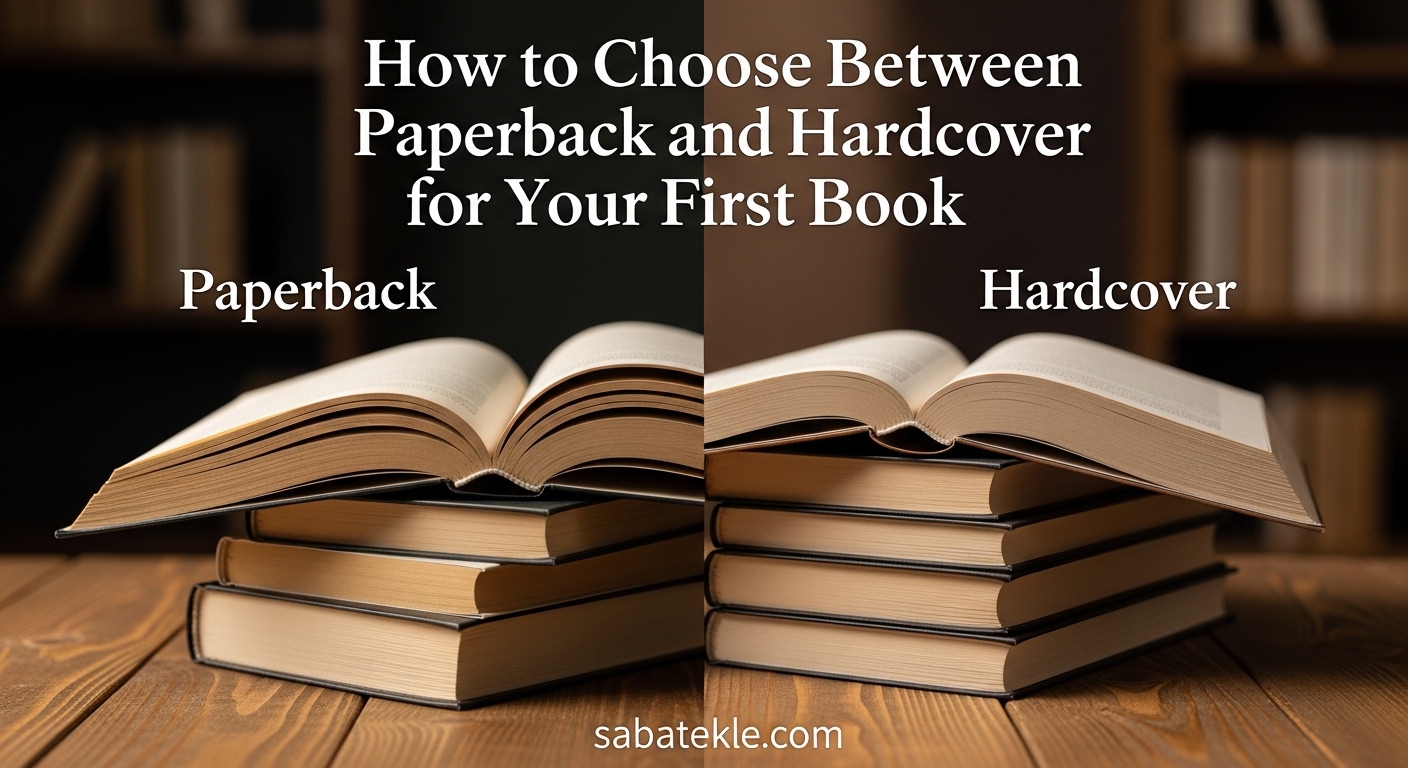
Publishing your first book is a milestone moment, and one of the earliest decisions you will face is choosing the right format. If you are wondering how to choose between paperback and hardcover for your first book, you are not alone. Thousands of debut authors wrestle with this exact question every year, and the answer depends on your budget, your genre, and the readers you want to reach.
Hardcover books carry a certain prestige. They look striking on a shelf and signal to readers that the content inside is worth a premium. Paperbacks, on the other hand, are the workhorse of the publishing world. They are affordable, portable, and far easier for first-time authors to produce without breaking the bank.
In this guide, I will walk you through every factor that matters, from production costs and durability to self-publishing platform options and genre expectations. By the end, you will have a clear framework for making this decision with confidence.
Table of Contents
What Is a Hardcover Book?
A hardcover book (sometimes called a hardback or hardbound book) has a rigid cover made from thick cardboard wrapped in cloth, paper, or sometimes leather. The pages are sewn or glued into the spine, making the binding strong and long-lasting. Most hardcovers also come with a dust jacket, that removable paper sleeve printed with the cover art and a blurb.
Hardcovers are the format of choice for collectors, libraries, and readers who want a book that can withstand decades of use. They feel substantial in your hands and tend to sit flat on a shelf without warping. For first-time authors, a hardcover edition can convey professionalism and signal that your work deserves a place alongside traditionally published titles.
What Is a Paperback Book?
A paperback book has a flexible cover made from thick paper or paperboard. The pages are glued into the spine, and the entire book bends slightly in your hands. There are two main types: trade paperbacks, which are the larger, higher-quality format you see in most bookstores, and mass-market paperbacks, which are smaller and printed on less expensive paper.
Paperbacks account for the majority of book sales worldwide. They cost less to produce, weigh less to ship, and are the go-to choice for readers who carry books on their commute or toss them in a backpack. For a first-time author, paperback is often the safest starting point because it keeps your upfront risk low while still delivering a professional-looking product.
How to Choose Between Paperback and Hardcover for Your First Book: 7 Key Factors
There is no universal right answer when it comes to hardcover vs paperback. The best choice depends on your specific situation. Here are the seven factors that should drive your decision.
1. Production Cost
Production cost is usually the single biggest factor for first-time authors. Hardcover books cost roughly three to five times more to produce than paperbacks of the same page count. A typical 300-page paperback might cost around $4 to $6 per unit through print-on-demand services, while the same book in hardcover could run $12 to $18 per copy.
If you are self-publishing on a tight budget, this difference matters immediately. Print-on-demand services like Amazon KDP and IngramSpark eliminate the need for large print runs, but the per-unit cost gap between formats stays significant. Many first-time authors start with paperback because it allows them to price competitively and still earn a reasonable royalty on each sale.
2. Durability and Longevity
Hardcover books are built to last. The rigid binding protects the pages from bending, and the spine holds up through hundreds of readings. A well-made hardcover can survive decades on a shelf, which is why libraries and collectors gravitate toward this format.
Paperbacks are more vulnerable. The glued spine can crack after repeated use, and the flexible cover shows wear much faster. That said, a trade paperback with good binding will still hold up for years under normal reading conditions. If your goal is a book that readers will keep on their shelves for a lifetime, hardcover wins. If you simply want readers to enjoy your story, paperback is more than adequate.
3. Portability and Reader Experience
Paperbacks are lighter and easier to carry. Readers who commute, travel, or read in coffee shops overwhelmingly prefer the lighter weight and flexibility of a paperback. A 300-page paperback might weigh around 10 ounces, while the same book in hardcover could weigh a pound and a half or more.
Hardcovers can feel cumbersome for casual reading. They do not bend to fit into a bag as easily, and holding a heavy book open for long periods can tire your hands. Many readers buy paperbacks for everyday reading and reserve hardcovers for their home library or special editions. If your target audience reads on the go, paperback aligns with their habits.
4. Pricing and Royalties
Hardcovers command higher retail prices, which means a larger dollar amount per sale even if the royalty percentage is the same. A hardcover novel might retail for $22 to $30, while a paperback edition of the same book could sell for $12 to $18. The higher price point can mean more money in your pocket per unit.
However, you also need to consider volume. Authors in self-publishing communities consistently report selling about 50 percent more paperbacks than hardcovers. Readers are simply more willing to take a chance on an unknown author when the price is lower. For a debut author, reaching more readers at a lower price point often builds a stronger foundation for future books than earning a higher royalty on fewer sales.
5. Genre Expectations
Your genre plays a real role in which format readers expect. Literary fiction, narrative nonfiction, memoirs, and academic works often release in hardcover first because the audience expects a premium product. If you are writing a literary novel or a serious nonfiction book, hardcover can reinforce the perceived value of your work.
Genre fiction such as romance, thriller, fantasy, and science fiction skews heavily toward paperback. Readers of these genres tend to buy more books more frequently, and they prefer the lower price and portability of paperbacks. Children’s picture books are a notable exception: many parents and gift-buyers prefer hardcover for the durability factor, especially for books that will be handled by young kids.
6. Self-Publishing Platform Options
Not every self-publishing platform offers both formats, and the ones that do have different requirements. Amazon KDP offers both paperback and hardcover printing, but hardcover has specific minimum page counts (typically 75 pages) and limited trim size options compared to paperback. KDP hardcover also does not currently support every marketplace that paperback does.
IngramSpark offers more hardcover options, including dust jackets and cloth binding with foil stamping, which gives you more control over the finished look. However, IngramSpark charges setup fees that KDP does not. If you want to offer hardcover without any upfront cost, KDP is the simpler path. If you want maximum customization and access to bookstore distribution, IngramSpark may be worth the setup fee.
This is a content gap I noticed in most competing articles: nobody explains the actual platform differences clearly. If you are planning to self-publish your first book, check the specific trim sizes and minimum page counts for your chosen platform before committing to a format.
7. Reader Perception and Collectability
Hardcover books carry an undeniable perception of quality. When a reader picks up a hardcover, it feels like an event. The weight, the cover art, the dust jacket, all of it communicates that this is a book worth keeping. Many experienced authors say they wish they had published their debut in hardcover because it would have signaled quality from day one.
At the same time, paperback feels approachable. Readers browsing an online store or a bookshelf are more likely to take a chance on an unfamiliar name when the price is accessible. For first-time authors building an audience from scratch, lowering the barrier to entry often matters more than projecting a premium image. You can always release a hardcover edition later once you have an established readership.
Decision Framework for First-Time Authors
After looking at the data from self-publishing communities and reviewing what works for debut authors, here is a practical framework to help you decide.
When Paperback Is the Smarter Choice
Paperback makes the most sense if you are on a limited budget, writing genre fiction, targeting readers who read on the go, or simply want to reach the widest possible audience with your first book. It is the lower-risk option, and it gives you room to learn the publishing process without a big financial commitment.
Most first-time self-published authors start with paperback for good reason. The lower production cost means you can price your book competitively, earn a solid royalty, and still break even on your investment faster. Author communities on Reddit and in self-publishing Facebook groups consistently recommend paperback as the starting format for debut authors.
When Hardcover Is Worth Considering
Hardcover deserves serious consideration if you are writing literary fiction, a memoir, or a nonfiction book aimed at a professional audience. It is also the better choice for children’s picture books, gift books, and any project where the physical object itself is part of the appeal.
If you plan to sell at events, conferences, or speaking engagements, a hardcover edition can justify a higher price point and make a stronger impression on buyers. Some authors publish both formats simultaneously, using the paperback for wide distribution and the hardcover for direct sales and collector appeal.
The Hybrid Approach: Publish Both
There is no rule that says you must choose only one. Many successful self-published authors list both a paperback and a hardcover edition on Amazon and other platforms. Print-on-demand makes this feasible because you only pay per unit sold, not for a warehouse of inventory upfront.
The hybrid approach lets you capture both audiences. Readers who want an affordable reading copy grab the paperback, while collectors and gift-buyers opt for the hardcover. The only extra work is formatting two cover files and potentially adjusting your interior for different trim sizes, but most of the effort is a one-time setup.
Quick Decision Checklist
Answer these questions to find your best format:
- Is your budget under $500 for the entire publishing process? Go with paperback.
- Is your book under 75 pages? Paperback is your only realistic option on most platforms.
- Are you writing genre fiction (romance, thriller, sci-fi, fantasy)? Paperback is the standard.
- Are you writing literary fiction, memoir, or professional nonfiction? Consider hardcover.
- Is your book a children’s picture book or gift book? Hardcover often performs better.
- Do you want maximum reader reach with lower risk? Start with paperback.
- Do you want to project a premium image for events or direct sales? Add a hardcover edition.
Still unsure? Start with paperback. You can always add a hardcover edition later once you have real sales data and reader feedback to inform the decision.
FAQ
Is it better to get a hardcover or paperback book?
It depends on your needs. Hardcover is better for durability, collecting, and gift-giving. Paperback is better for affordability, portability, and everyday reading. For first-time authors, paperback is usually the safer starting point.
Why do people prefer hardcover?
People prefer hardcover for its durability, premium feel, and collectability. Hardcover books last longer, look better on shelves, and often come with dust jackets featuring high-quality cover art. They also tend to hold their resale value better than paperbacks.
Do hardcovers feel better to hold?
This comes down to personal preference. Hardcovers feel solid and substantial, which many readers enjoy. However, they are heavier and harder to hold open with one hand. Paperbacks are lighter, more flexible, and easier to manage during extended reading sessions.
What type of book lasts the longest?
Hardcover books last the longest. The rigid binding protects the spine, and the sturdy cover shields the pages from damage. A well-made hardcover can survive decades or even centuries with proper care. Paperbacks typically show wear within a few years of regular use.
Do authors make more money from hardcover books?
Authors earn a higher dollar amount per hardcover sale because the retail price is higher, but they usually sell fewer hardcover copies than paperback. Self-published authors report selling roughly 50% more paperbacks than hardcovers. Total earnings depend on whether the higher per-unit royalty offsets the lower sales volume.
Why do publishers release hardbacks first?
Publishers release hardbacks first to maximize revenue from dedicated fans and library sales, who are willing to pay a premium for early access. The hardcover release also generates reviews and media coverage. A paperback edition typically follows six to twelve months later to capture price-sensitive readers.
Final Thoughts
Learning how to choose between paperback and hardcover for your first book comes down to understanding your audience, your budget, and your goals. Paperback offers lower risk, wider reach, and a faster path to building a readership. Hardcover delivers a premium product that commands respect and holds lasting value.
Most debut authors start with paperback and add hardcover later, but there is no wrong answer if you have thought through the seven factors I covered above. The most important step is simply to publish. Your format choice matters far less than the story or knowledge you are sharing with the world.
Take the checklist, run through it honestly, and trust your instincts. Your first book is a learning experience regardless of the format you choose. The best decision is the one that gets your book into readers’ hands.